
Who Was Martin Luther?
The man behind our school’s name — and the Gospel that still shapes every classroom.
Who was Martin Luther? He was a German pastor and teacher who, more than 500 years ago, helped the whole Christian church rediscover the good news of Jesus Christ — and he is the man Martin Luther School in Joplin, Missouri is named after.
Two Men Named Martin Luther
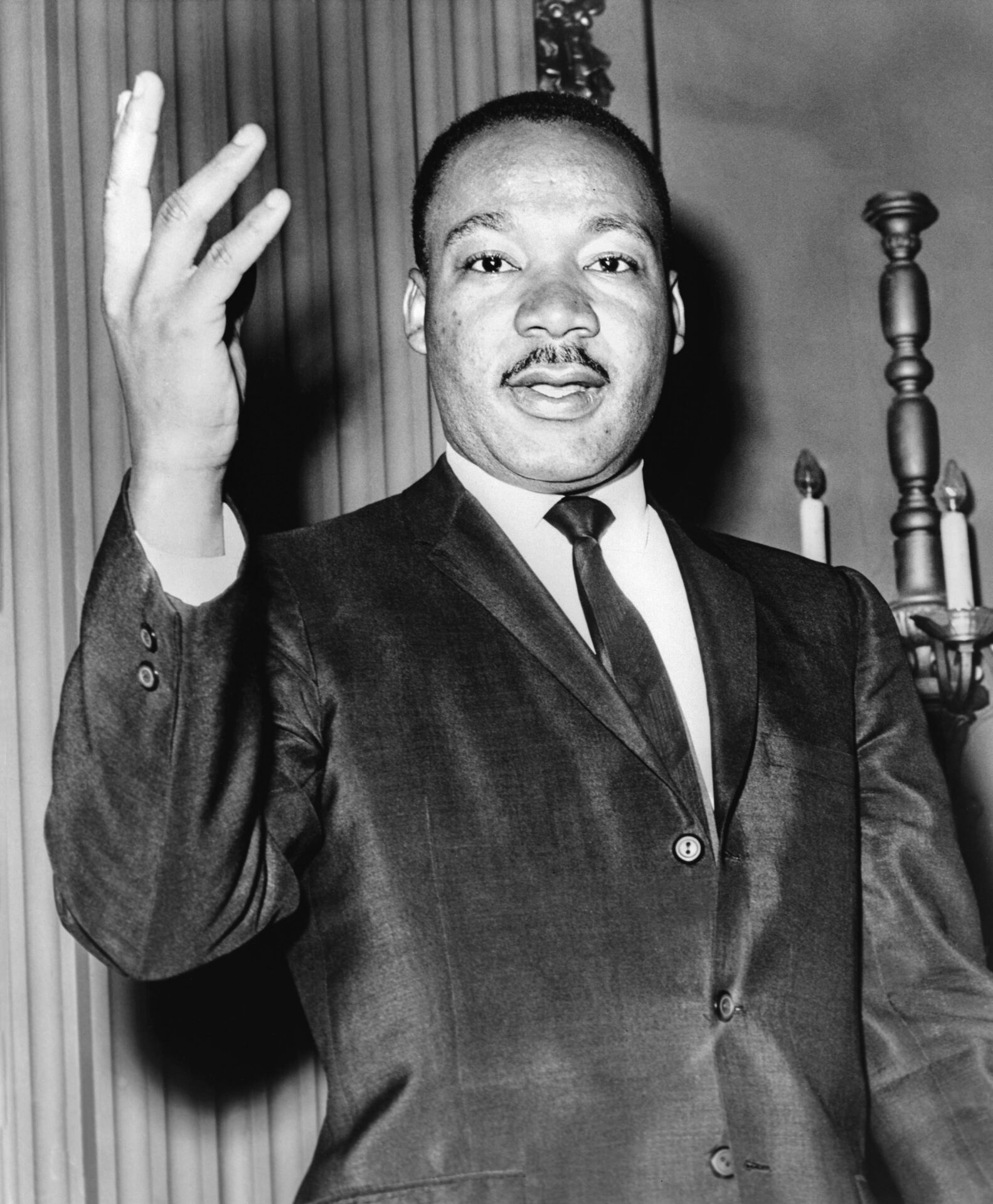
If the name sounds familiar, you may be thinking of Dr. Martin Luther King Jr., the great American civil-rights leader. That is an easy and understandable mix-up — and here is a wonderful piece of history: Dr. King was named after this very reformer. His father, a Baptist pastor, was so moved during a 1934 visit to Germany that he took the name “Martin Luther” for himself and his young son.
So there are two Martin Luthers worth knowing — a 20th-century champion of justice, and the 16th-century reformer our school is named for. Both point us to a God who loves people. This page is about the reformer: who he was, what he recovered, and why a school in Joplin still carries his name.

The Man Who Rediscovered the Gospel
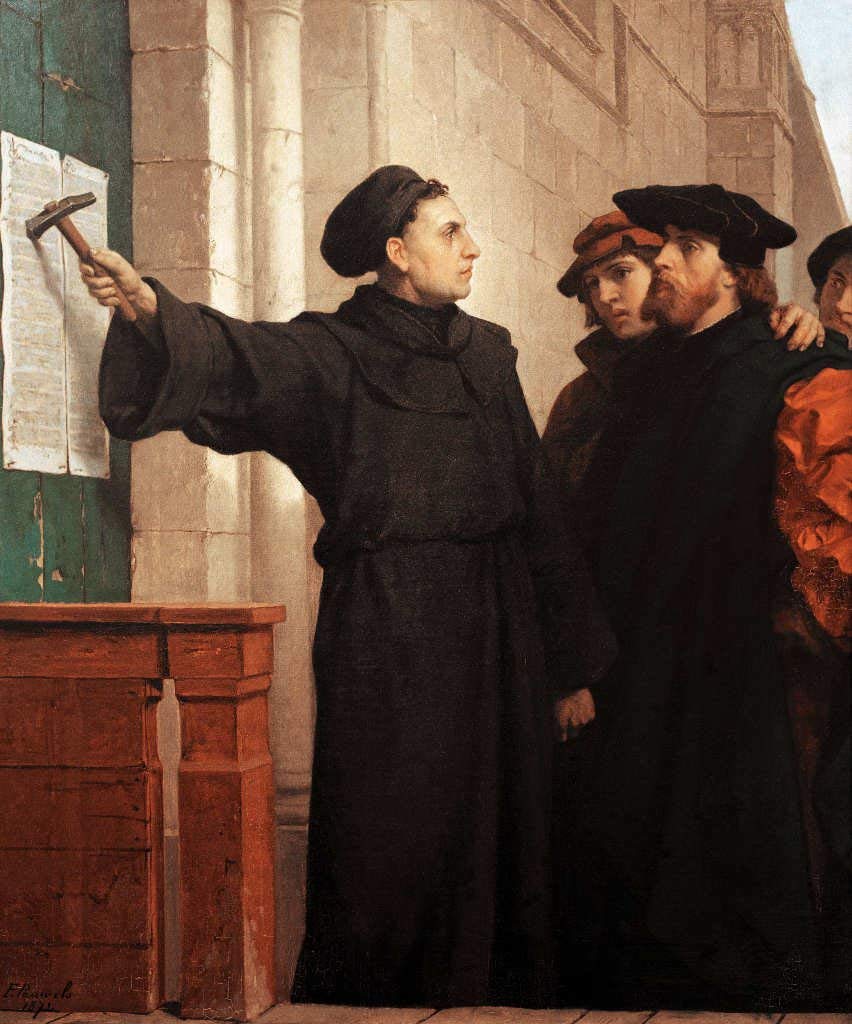
Martin Luther (1483–1546) was a monk, a priest, and a professor of the Bible at the University of Wittenberg in Germany. For years he wore himself out trying to earn God’s approval — fasting, confessing, punishing himself — and still felt he could never do enough. Then, studying the book of Romans, a single sentence broke through: “The righteous shall live by faith.”
Luther realized that we are not saved by our own effort but by God’s free gift, received through faith in Jesus. That discovery changed everything. On October 31, 1517, he nailed a list of 95 statements for debate to the church door in Wittenberg, challenging the sale of “indulgences” — the idea that forgiveness could be bought. What began as an academic debate became the Protestant Reformation, the movement that gave birth to the churches most evangelical Christians belong to today.
“For I am not ashamed of the gospel, for it is the power of God for salvation to everyone who believes… For in it the righteousness of God is revealed from faith for faith, as it is written, ‘The righteous shall live by faith.'”
Romans 1:16–17 (ESV)
Luther summarized the Gospel he recovered in three simple confessions, the same ones we teach on our What We Believe page:
- Grace alone (sola gratia) — salvation is God’s gift, not our achievement.
- Faith alone (sola fide) — we receive that gift by trusting Jesus, not by earning it.
- Scripture alone (sola scriptura) — God’s Word, the Bible, is our final authority.
He also believed every Christian should be able to read the Bible in their own language, so he translated it into everyday German — one of the most important books ever printed, and a gift that eventually reached the English Bibles on our shelves today.
Martin Luther may be the most important education reformer in Western history.
A Champion of Education for Every Child
Here is what many people don’t know: if people were going to read the Bible for themselves, they needed to be able to read — so Luther argued, boldly for his time, that every child should be taught, not just the wealthy and not just boys.
In 1524 he wrote an open letter, To the Councilmen of All Cities in Germany, That They Establish and Maintain Christian Schools, urging towns to open schools for both boys and girls. In 1530 he followed with A Sermon on Keeping Children in School. Christian education as we know it — including our own Christ-centered classrooms in Joplin — grows directly out of Luther’s conviction that faith and learning belong together.
Faith Begins at Home

Luther also treasured the family. In 1525 he married Katharina von Bora, a former nun, and their bustling home in Wittenberg became a model of the Christian household — full of children, students, guests, music, and prayer.
For that home, Luther wrote the Small Catechism in 1529, a short, plain guide to the Christian faith. He wrote it specifically so that parents could teach the faith to their children around the table. Each section famously begins, “As the head of the family should teach it in a simple way to his household.” Nearly 500 years later, families still learn the faith from Luther’s Small Catechism (you can read it free at catechism.cph.org), and it remains at the heart of what we do at Martin Luther School.
Luther’s idea still works at the kitchen table today. When your child asks something big about God, our free guide Help for the Hard Questions pairs each of 40 real questions kids ask with a simple answer, Bible verses and the Small Catechism.
A mighty fortress is our God, a trusty shield and weapon;
“A Mighty Fortress Is Our God,” LSB 656 (words by Martin Luther)
He helps us free from ev’ry need that hath us now o’ertaken.
Lutherans Have Always Built Schools
Luther’s conviction that faith and learning belong together crossed the ocean with Lutheran immigrants. In 1839, about 700 Saxon Lutherans settled the Missouri frontier of Perry County, founding villages they named Altenburg, Wittenberg, and Frohna. That very first year — before they had built much of anything — they raised a one-room “Log Cabin College” to teach their children and train pastors and teachers. It was the first Lutheran college west of the Mississippi River and the seed of today’s Concordia Seminary. Those settlers went on to form the Lutheran Church—Missouri Synod, the church body Martin Luther School belongs to today. You can explore that heritage through the Concordia Historical Institute, the LCMS’s official archives in St. Louis.

That same instinct took root here in Joplin. Immanuel Lutheran Church was founded in 1897, but when the congregation settled on South Connecticut Avenue, it built the school first. Martin Luther School broke ground on October 21, 1956. For a couple of decades, one room did it all — a gym and lunchroom through the week, and the congregation’s sanctuary on Sundays. It’s still our gymnasium today. The old altar area is now the stage for our school musicals, and the original cross still hangs behind it — a quiet reminder of where we started. The church’s own sanctuary wasn’t dedicated until 1976. Here, the place to teach the children came before the church building — and that tells you what Lutherans treasure.
Why Our School Bears His Name
When Immanuel Lutheran Church founded our school in 1953, naming it Martin Luther School was a promise: that here, faith and learning would never be separated. Everything Luther cared about still shapes our school today.
- The Gospel at the center. Like Luther, we point children first to Jesus and His grace — not to their own performance.
- Education for every child. We welcome families from every church background and none.
- Faith and family together. We partner with parents, the first teachers of the faith, from Early Childhood through eighth grade.
- The whole child. We kindle character, spark joy, and ignite curiosity through the light of Christ.
We’re not here to make little Lutherans — we’re here to encourage little Christians.
We are affiliated with the Lutheran Church—Missouri Synod (LCMS), a church body that has held to Luther’s confession of the Gospel for generations and trains its pastors in that same theology at Concordia Seminary, St. Louis. You can learn more about our story on our About Us and Our History pages, or see how faith shapes our daily life on our Faith & Values page.
Frequently Asked Questions
Is Martin Luther School named after Dr. Martin Luther King Jr.?
No — but it’s a natural question. Our school is named after Martin Luther (1483–1546), the German reformer. Interestingly, Dr. Martin Luther King Jr. was himself named after that same reformer, when his father adopted the name after a 1934 trip to Germany. We hold Dr. King in deep respect; our school simply carries the name of the man who first bore it. You’ll find this and more on our FAQ page.
What was the Reformation, and why does it matter to me?
The Reformation was a 16th-century movement that recovered the biblical truth that we are saved by God’s grace through faith in Jesus, not by our own works. Nearly every Protestant and evangelical church today traces its roots to it. It matters because it is simply the Gospel — the best news there is.
Do I have to be Lutheran to attend Martin Luther School?
Not at all. We welcome families from every Christian tradition and from families with no church home. We share the Gospel joyfully and never pressure any child; our goal is to encourage little Christians, whatever their family’s church background.
What is the Small Catechism?
It’s a short, plain summary of Christian teaching that Luther wrote in 1529 so parents could teach the faith to their children at home. It covers the Ten Commandments, the Apostles’ Creed, the Lord’s Prayer, and the Sacraments, and it is still used in Lutheran homes, churches, and schools today.
How does Luther’s vision still shape MLS today?
Directly. His belief that every child should be educated, that faith and learning belong together, and that parents are the first teachers of the faith is exactly how we operate — from preschool through eighth grade. Schedule a tour and see it for yourself.
Come See What Luther’s Vision Looks Like Today
Faith and learning, together, for every child. Schedule a visit or start your application — we’d love to meet your family.
Martin Luther School is affiliated with the Lutheran Church—Missouri Synod (LCMS) and accredited through National Lutheran School Accreditation. Historical portraits of Martin Luther and Katharina von Bora by Lucas Cranach the Elder; portrait of Dr. Martin Luther King Jr. courtesy Library of Congress; Martin Luther School groundbreaking photo courtesy Immanuel Lutheran Church archives.